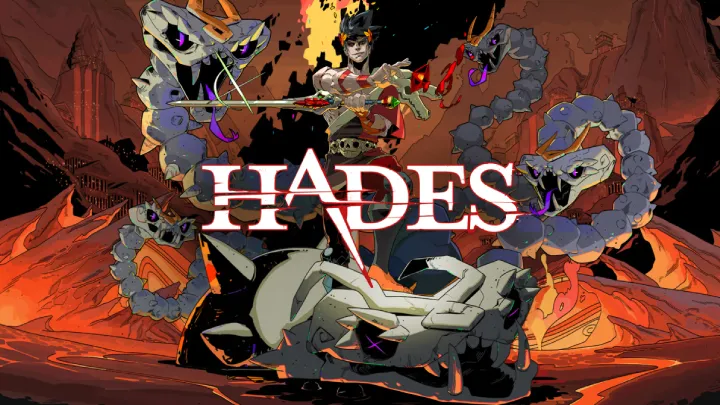
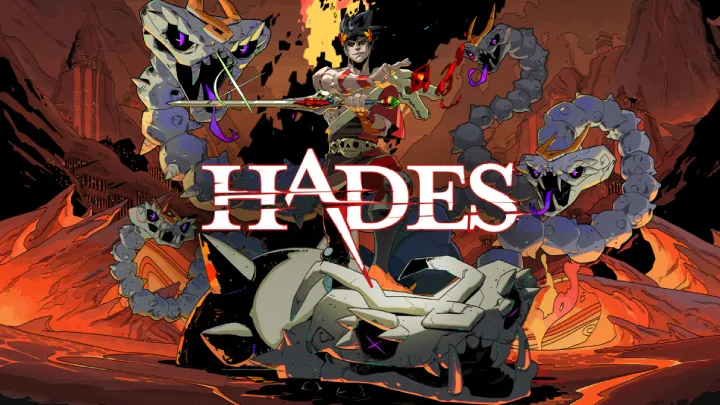
Hades, released in 2020 by Supergiant Games, redefined the roguelite genre by seamlessly weaving an emotionally compelling narrative into a loop of perpetual death and rebirth. The game's unprecedented critical and commercial success—selling over 10.6 million copies—established it as a modern classic and secured the future of its developer. Now, in late 2025, the original story of Zagreus and his quest to escape the Underworld serves as the bedrock for its celebrated sequel, Hades II, starring his sister Melinoë. The first game remains a masterpiece of design, celebrated for its unique structural brilliance, its charismatic cast, and its status as the originator of Supergiant's first-ever sequel.
 1. The Structure: Narrative Progression Through Death
Hades masterfully subverted the standard roguelite structure by making failure the primary driver of its story, a concept coined as the "fail forward" design.
Death as a Dialogue Trigger
Each run by protagonist Zagreus, the Prince of the Underworld, inevitably ends in death, but this is never a penalty. Instead, death returns Zagreus to the House of Hades, triggering vital character interactions. Relationships deepen, story threads advance, and new pieces of lore are revealed only through these frequent, forced retreats. This design ensures that every run, regardless of failure, contributes meaningful progress to the game’s core objective: the story of the dysfunctional Chthonic family.
The True Ending and Epilogue
The game’s narrative has two major completion points. The True Ending is achieved after Zagreus successfully escapes and returns to the surface ten times, completing his pact with his mother, Persephone. The much longer, lore-heavy Epilogue is unlocked through specific relationship milestones and quests with the gods, which cements the fragile peace between Olympus and the Underworld. This multi-layered conclusion rewards persistent play well beyond the first successful run.
2. The Relationship System: Charisma and Mythology
The game’s emotional core lies in its expansive cast of fully voiced, beautifully drawn characters, establishing a benchmark for NPC depth in the genre.
The Chthonic Family Dynamic
The story’s strength is the compelling dynamic between Zagreus and his immediate family, most notably the fraught relationship with his demanding father, Hades, and the complex journey to reunite his parents. Characters like Nyx (the personification of Night) and the sweet, shy Dusa (a Gorgon head) offer essential narrative and mechanical support, all tied to the player's progression through gifts of Nectar and Ambrosia.
The Olympian Pantheon
The Olympian gods are the primary source of power, represented by Boons. Each god possesses a distinct, memorable personality that shines through their dialogue and interactions. Crucially, the player’s choice of boons—and which gods they encounter—affects the relationships and dialogue, meaning a run focused on Zeus, for example, will elicit unique commentary from other gods when he is mentioned.
3. Combat and Build Diversity: The Boon System
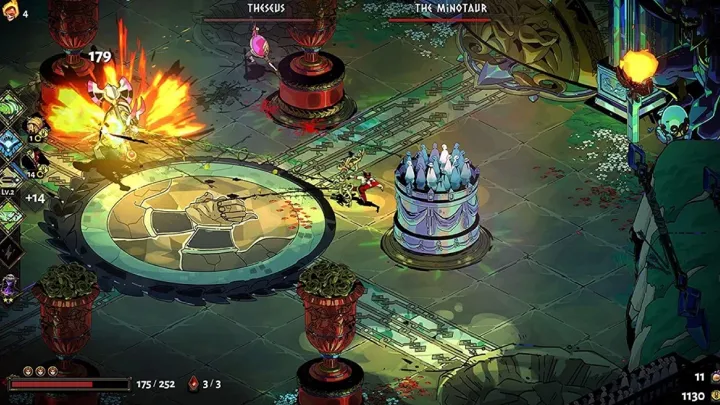
The fast-paced, isometric combat is the foundation of the gameplay, built upon a near-limitless number of potential weapon and Boon combinations.
The Infernal Arms and Aspects
Zagreus wields six distinct Infernal Arms (Sword, Bow, Shield, Spear, Gauntlets, and Railgun). Each weapon has four unlockable Aspects (e.g., Aspect of Arthur on the Stygian Blade), which dramatically change the weapon’s core mechanics, effectively creating 24 different weapon experiences. The Aspect of Eris on the Adamant Rail, which increases damage after using the special, remains a foundational choice for high-speed runs.
Duo Boons and Synergies
The Boon System allows players to stack blessings from different gods. The highest level of power comes from Duo Boons, powerful secondary abilities unlocked when meeting specific prerequisite boons from two different gods (e.g., the infamous Mirage Shot from Poseidon and Artemis). The constant chase for these high-synergy combinations provides the game's endless replayability.
4. The Enduring Challenge of the Pact of Punishment
For experienced players, the Pact of Punishment system provides a customizable difficulty curve, ensuring the game remains fresh long after the main story concludes.
Heat and Reward
After the first successful escape, the Pact is introduced, allowing players to activate various negative modifiers—known as Heat—such as making enemies faster (Forced Overtime) or increasing the required number of boss phases (Extreme Measures). Each incremental Heat level rewards a new bounty of resources, incentivizing players to push the difficulty to their personal limit.
High Heat Milestones
Specific milestones, particularly 32 Heat (the community benchmark for a high-difficulty clear) and the current community goal of 64 Heat, require masterful understanding of the game’s mechanics and the construction of ultra-optimized builds.
 5. The Competitive Speedrunning Scene
The tight, deterministic nature of Hades' combat has cultivated one of the most technical speedrunning communities in the roguelite genre.
The Sub-6 Minute Chase
The competitive benchmark for an Any% run (one clear) is measured by In-Game Time (IGT). The original Hades remains competitive years later, with the World Record sitting around the 5-minute, 4-second mark. Achieving a "sub-6" run requires nearly frame-perfect execution, precise enemy manipulation, and the luck of finding the correct Daedalus Hammers and Boons early on.
Core Speedrunning Techniques
Runners utilize specific builds to maximize damage and minimize room clear time:
- The Beowulf Aspect: The Shield Aspect of Beowulf (which loads the Cast into the bull rush) is a former WR holder, renowned for massive burst damage with the right Boons (often Poseidon's Flood Shot for the Mirage Shot Duo).
- Eris Aspect: The Railgun Aspect of Eris is the current preferred WR weapon due to its consistent, massive damage buff (75% to all damage for 4 seconds after using the special) and easy activation.
6. The Art and Music: Signature Supergiant Style
Hades' unique atmosphere is defined by the impeccable, consistent aesthetic quality of developer Supergiant Games.
Jen Zee's Character Design
Artist Jen Zee delivered a stunning, high-fantasy vision of Greek mythology, giving every character a distinct, expressive, and immediately iconic design. The hand-painted, illustrated look of the character portraits and environment contrasts sharply with the smooth, real-time 3D models of Zagreus and the enemies, creating a distinctive visual style.
Darren Korb's Soundtrack
The electric, genre-bending score by composer and voice actor Darren Korb is critical to the game's pace. The soundtrack, particularly the rock-and-roll escalation of the boss themes, perfectly mirrors the increasing chaos of the combat. The theme that plays in the House of Hades, featuring the soothing voice of the goddess Persephone (voiced by Korb's wife, Ashley Barrett), provides a calm, inviting respite between the chaos of the runs.
7. The Sequel's Shadow: Hades II (2025)
The state of the original Hades in late 2025 is inseparable from the triumph of Hades II, which was fully released on September 25, 2025, and instantly achieved critical acclaim (Metacritic scores exceeding 94/100).
The New Protagonist
Hades II stars Melinoë, Zagreus's sister and Princess of the Underworld, who wields witchcraft and focuses on fighting the Titan of Time, Chronos. The sequel is confirmed to have built upon the first game's foundation, featuring more locations, weapons, and Olympian gods (like Apollo), all while retaining the narrative "fail forward" structure.
The Original as a "Prequel"
The sequel's success has cemented the original Hades as an official prequel, driving millions of new players to experience Zagreus's story first. Steam statistics show the original game retains an active, high-retention player base, driven by the desire to fully appreciate the returning characters and lore references in Hades II.
8. Critical and Commercial Milestones
Hades is one of the most decorated games of its generation, with its achievements still cited as a benchmark for the industry.
Major Awards and Sales
The game was the first to win the coveted Hugo Award (Best Video Game) and won Game of the Year awards from numerous outlets, holding a universal Metacritic score of 93/100. Its 10.6 million copies sold (as of 2025 data) make it Supergiant's most successful game by a massive margin, justifying the production of its sequel.
9. Accessibility and The God Mode Feature
Supergiant Games’ commitment to narrative accessibility is evidenced by the inclusion of the God Mode feature.
Lowering the Barrier to Story
God Mode is an optional toggle that grants the player a flat 20% damage resistance, which increases by 2% with every subsequent death, eventually capping at 80% damage reduction. This feature was implemented specifically to ensure that players less familiar with the demanding action-RPG genre could still experience the full, rich narrative, upholding the studio’s belief that great story should not be gated by high mechanical skill.
 10. The Enduring Themes
The core of Hades' longevity is its deeply human story, despite its mythological setting.
The Importance of Home
The central theme is not escaping from the Underworld, but redefining Home. Zagreus’s quest is less about freedom from his father's domain and more about finding a way to bring his fractured family back together. The ultimate reward is not a triumphant escape, but a reconciled family and the warm, quiet satisfaction of an ordered household. This emotional depth is what elevates Hades beyond a mere hack-and-slash game.
Conclusion: The New Foundation of Olympus
The original Hades remains one of the most influential video games of the last decade. Its "fail forward" narrative, unparalleled character work, and flawless combat system set the stage for its equally successful sequel, Hades II. Though the focus of the community has shifted to the adventures of Melinoë, the story of Zagreus and the House of Hades is now cemented as an immortal, essential foundation of modern mythological storytelling. The cycle of death and rebirth continues to draw in new players, ensuring that the original Underworld will never truly be empty.